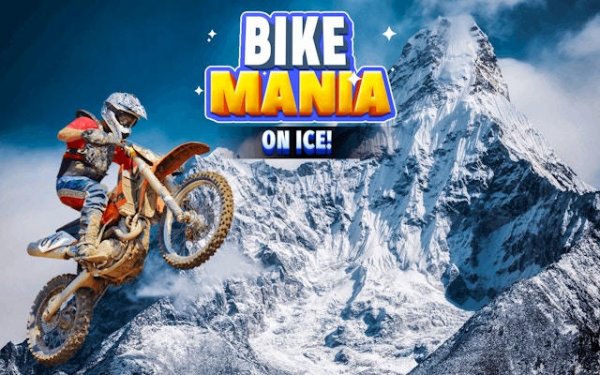
Track Design & Surface Physics
Each course in Glacial Rider presents a unique layout of slopes, bumps, and sharp turns, all covered in a layer of ice. The surface dramatically affects traction, requiring riders to adjust their approach constantly. Unlike standard dirt or pavement tracks, the frozen ground offers little grip, meaning every acceleration and brake input must be measured. Players quickly learn that maintaining control is more important than raw speed. The tracks are designed to test patience and precision, with obstacles that demand careful timing rather than aggressive maneuvering.
Vehicle Handling & Control
The motorcycle responds to simple controls for acceleration, braking, and leaning forward or backward. On ice, leaning becomes a critical tool for maintaining balance during turns and jumps. Going too fast into a corner can cause a slide, while too slow a pace may leave the bike unable to clear an upcoming rise. The handling model rewards smooth inputs and penalizes jerky movements. Riders must develop a feel for how the bike shifts weight on the slippery surface, making each run a lesson in subtle adjustments.
Progressive Difficulty & Replay Value
As players advance, tracks introduce more complex terrain combinations and tighter sections. Early courses allow for learning basic ice physics, while later stages require mastery of momentum management across longer distances. The unpredictable nature of ice means that even familiar tracks can surprise, encouraging repeated attempts to improve times and consistency. This design supports both short play sessions for quick challenges and longer practice runs for those aiming to perfect their technique.
Strategic Approaches for Success
Effective riders begin each new track by taking a slow reconnaissance lap to identify tricky spots. Gentle throttle and brake applications help maintain stability, while anticipating the bike's angle before jumps prevents awkward landings. Building muscle memory through repetition allows players to understand how speed and weight distribution interact on ice. Patience is a valuable asset—rushing often leads to loss of control. Focusing on incremental improvements, such as smoother cornering or better jump timing, yields more consistent progress than attempting flawless runs immediately.


Comments
0 comments