Core Puzzle Logic
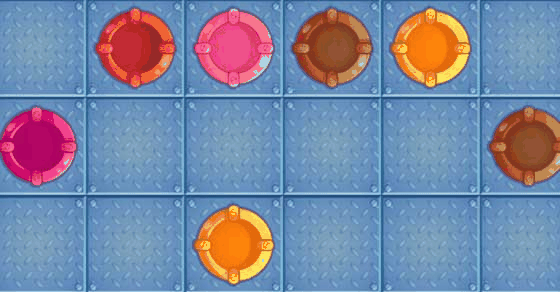
At its heart, Color Path Puzzle asks players to link pairs of colored endpoints on a grid. Each connection must be a continuous line of pipe segments, and those segments cannot intersect or overlap. A further requirement is that every square on the board must contain a piece of pipe, meaning no empty spaces remain. This combination of constraints turns each level into a satisfying spatial reasoning exercise.
Progression and Complexity
The game begins with small grids and only two or three color pairs, allowing newcomers to grasp the mechanics quickly. As players advance, the boards grow larger and introduce more colors, increasing the need for careful planning. Later puzzles may require players to think several moves ahead to avoid blocking a future connection. This gradual ramp in difficulty keeps the experience fresh without becoming overwhelming.
Visual Design and Interaction
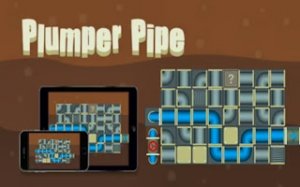
Color Path Puzzle uses a clean, uncluttered visual style. Each pipe segment is clearly colored, and the endpoints are easy to distinguish. Players interact by clicking or tapping on a segment to rotate it, with each rotation cycling through the four possible orientations. The interface provides immediate feedback, making it simple to experiment with different arrangements. There are no timers or penalties, so players can proceed at their own pace.
Strategic Approaches
One effective strategy is to begin with the edges of the grid, where connections often have fewer possible routes. Another is to focus on one color pair at a time, but remain aware of how each placement affects other paths. If a player becomes stuck, restarting the level provides a fresh start. Regular practice helps improve pattern recognition and the ability to visualize solutions before rotating any pieces.















Comments
0 comments